
In a world of instant gratification, waiting can be the hardest thing.
But what if you were waiting for something that could actually ‘change the world.’ Could you wait six months? A year? How about 15 months?
That’s how long Emily Mercy, HBA ’21, Blake Bunting, BASc’22, and Elliot Warner, HBA ’22, have been waiting to get the go-ahead for their revolutionary venture that will change the way Canadians can invest in the future they want to see.
Goparity Canada is an impact finance platform that provides investors in a growing list of provinces the opportunity to fund Canadian businesses working on projects that support the realization of the United Nation’s Sustainable Development Goals, which could include job creation, reducing CO2 emissions, or protecting biodiversity. Each project’s impact will be measured using benchmarks set forth by the Global Impact Investing Network (GIIN), and Goparity Canada will communicate the real-world impact with metrics that are clear and easy for potential investors to understand.
Having received the green light from Canadian regulators, Goparity Canada will be launching its online platform on June 22nd and has already lined up some intriguing projects. And while every start-up is a gamble, there is success and good precedence built into the company’s new business model.
The venture is designed around a business model developed in Portugal, which has become a hotbed for social entrepreneurship. Since launching in 2017, the Portugese edition of Goparity has funded 276 projects with more than €25 million. While learning from their success and adopting best practices, Mercy, Bunting, and Warner have been intentional in how they’ve remodeled their venture to fit the Canadian context.
“It's important to know that money is part of your supply chain. It does have a footprint. So we're really really excited to be launching Goparity in Canada now so that people can see exactly where their money is going and what kind of impact it’s going to be creating,” said Mercy.
A solution from across the ocean
Bunting and Warner were friends coming into Western University. They met Mercy during first year and their common interests in sustainability and renewable energy had them participating in many of the same clubs and extra-curricular activities.
Warner and Mercy joined the Ivey HBA Program and discovered opportunities and obstacles to the values they were hoping to nurture through their academic and professional careers. They were both fascinated by the idea of sustainable finance, which includes the use of regulations, standards, norms, and products that target environmental objectives, but discovered much of the curriculum was tilted towards traditional finance that solely prioritizes growth and profit. But there was a crack in the door after Mercy attended a conference on Impact Investing, which ties environmental and social benefits to financial returns.
But the excitement was short-lived.
“I couldn’t participate because it was not for most retail investors*. You would have to invest 10s of 1000s or 100s of 1000s of dollars just to get started. It was obviously for high net-worth individuals, so I was a little bit let down by my inability to participate in the space,” said Mercy.
But that sense of disappointment found a new lease on life when Mercy and Warner moved into the New Venture Project, the foundational entrepreneurship course at Ivey. There, they took the opportunity to flesh out a solution that might allow more people to put their money where their values were and sought to create an investing platform that used crowdlending to pool and distribute money to impactful investment projects.
“This was the last opportunity we had to create a business where we were going to be supported in so many different ways… access to alumni, professors, amazing students… So we had to take advantage of it!”
Elliot Warner, HBA '22
For prosocial consumers interested in investing, there were a few options on the market already - like the growing number of securities and bonds portfolios that include environmental, social, and governance (ESG) factors in their investment process. However, some have critiqued these funds for their lack of transparency. In some cases, ESG portfolios included significant portions from large corporations whose operations were acting against the goals of sustainable development.
As much of their school term was hampered by the COVID-19 pandemic, Mercy, Warner, and their team took advantage of a vast open online world and cast their nets wide. Two of their most important advisors during the New Venture Project were Ameet Shah, the founder and CEO of Astonfield Solar in Kenya, and Erik van Veen, the founder and managing partner of Kigeni Holdings in South Africa.
When the project came to a close, only Mercy and Warner were interested in pursuing it further. Bunting was not officially part of the New Venture Team, but he was intrigued by it and the progress the team had made; he even helped proofread the business plan. There was a sense that they had come too far to stop now.
This would become a recurring theme along their journey.
Bunting officially joined Mercy and Warner, and the idea to bring impact investing to the masses graduated from the classroom. In the fall of 2021, the team spent four months working on the venture at the Western Accelerator.
As they were continuing to explore options and models around the world, they came across a Portugese-based service, Goparity, that had already opened the door for thousands of people to invest in impactful projects across Europe, Africa, and South America. After chatting with their leadership team, Mercy, Bunting, and Warner, were excited to replicate the Goparity model in Canada.
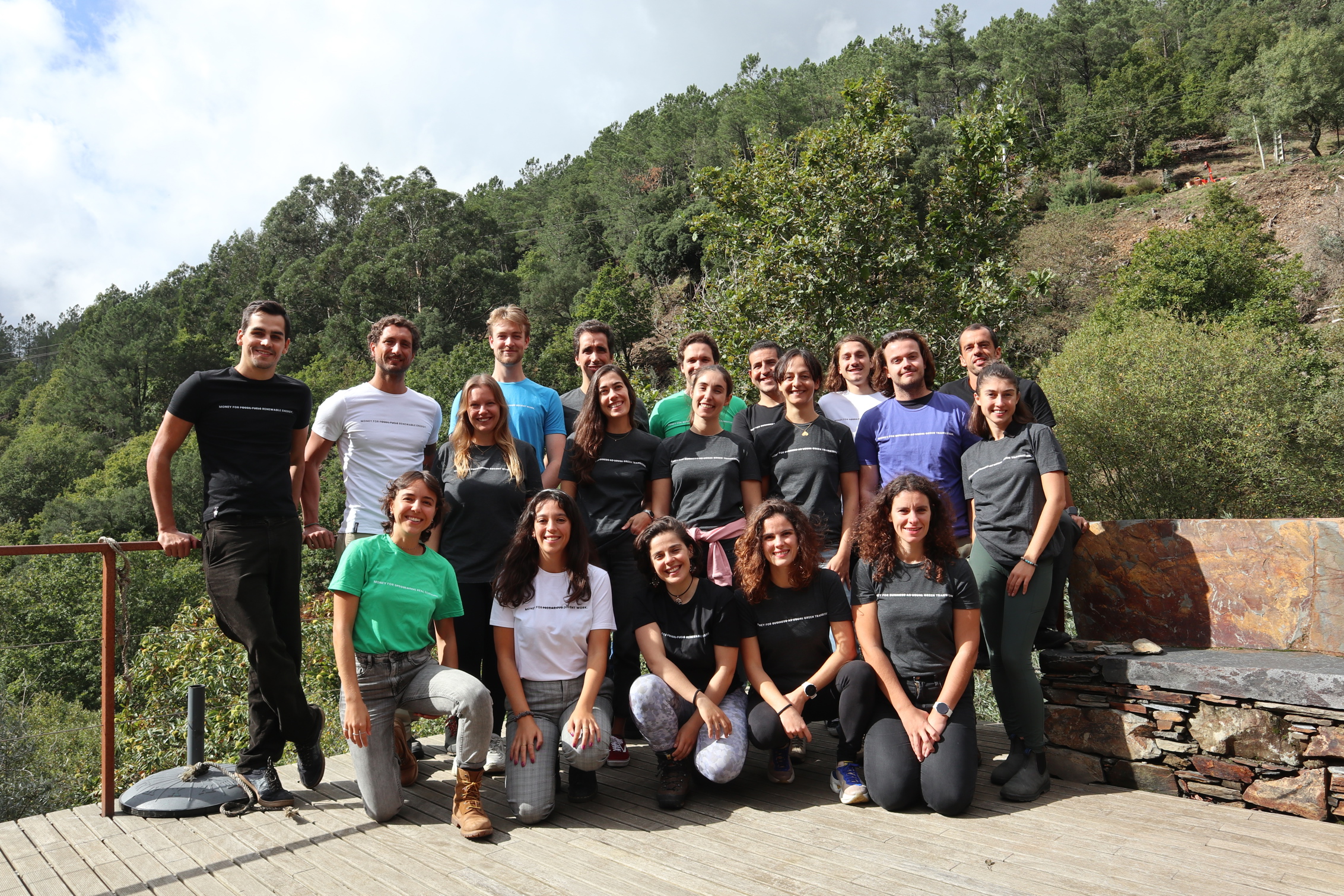
Mercy, Bunting, and Warner with the GoParity Team in Portugal.
However, the financial landscape on both sides of the Atlantic wasn’t fully compatible and they began the long and tedious process of working with Canadian regulators to bridge the gap. This effort was led by Bunting who spent hours reading regulations, talking to lawyers, talking to entrepreneurs, and putting together pieces from existing codes to create a space for their crowd-lending platform.
“I think we all proved to ourselves that we could learn a lot if we set our minds to it,” said Bunting.
The team spoke with Ivey grads like Cato Pastoll, HBA’17, Co-founder of Lending Loop, a peer-to-peer online platform that allows Canadians to invest in small businesses, and provides these ventures affordable loan options from $1,000 to $500,000. Lending Loop itself was a first in Canada and had to jump through a number of regulatory hurdles before launching. They also drew support and advice from Alexander Morsink, Managing Director of Canadian crowdlending platform Equivesto.
“It can be really scary to seek help from super smart people, but that is the thing that’s going get you to go the furthest,” said Mercy.
While the regulation process was estimated to take six months, it was heavily hampered by delays caused by the COVID-19 pandemic as well as the recent crypto crash. Goparity Canada would only get approved fifteen months later.
Lessons in waiting
The past two years (not counting the New Venture Project that began in 2020) are a testament to the dedication and passion imbued by Mercy, Warner, and Bunting, as they kept pushing the boundaries to make Goparity Canada a reality.
“If we really thought about this idea for too long, I would have said this was way too big and we won’t be able to accomplish it,” said Bunting.
But it was also an opportunity to know more about themselves and learn lessons that only develop through toil, patience, and perseverance.
For Bunting, it was the power of that overriding belief of making it to the finish line despite not having all the answers.
You are never going to be ready, and you're never going to know everything. But if you keep that belief with you that you are going to get to where you are going - it might look different - but you will get there even if you don’t know the steps.
For Warner, having worked on the idea since 2020 and gone through multiple iterations, it has been about having the wisdom and courage to know when to change track.
“Pivots and changes are not a sign of weakness or being wrong but it's actually a really good sign that you are on the right track - even if you have to completely change everything and restart from scratch.”
“Not making that change and continuing down that wrong road is much worse,” said Warner.
For Mercy, it’s about being open to receiving advice from others.
It’s okay not to be the smartest at something. It’s okay to feel that you are totally out of your element. The absolute best thing that you can do is seek help and listen to others; even if you don’t follow their advice... You will learn the most from listening to others.
These are lessons that will keep each of them in good stead as they continue to build Goparity.
It’s been a long time coming, but June 22nd will be an opportunity to finally celebrate what Mercy, Bunting, and Warner have accomplished.
Even more, it’s an opportunity to celebrate the change that is possible when more and more Canadians have the ability to invest their money in their values.
*A retail investor, also known as an individual investor, is a non-professional investor who buys and sells securities or funds that contain a basket of securities such as mutual funds and exchange-traded funds (ETFs).